
What our heat press check covers
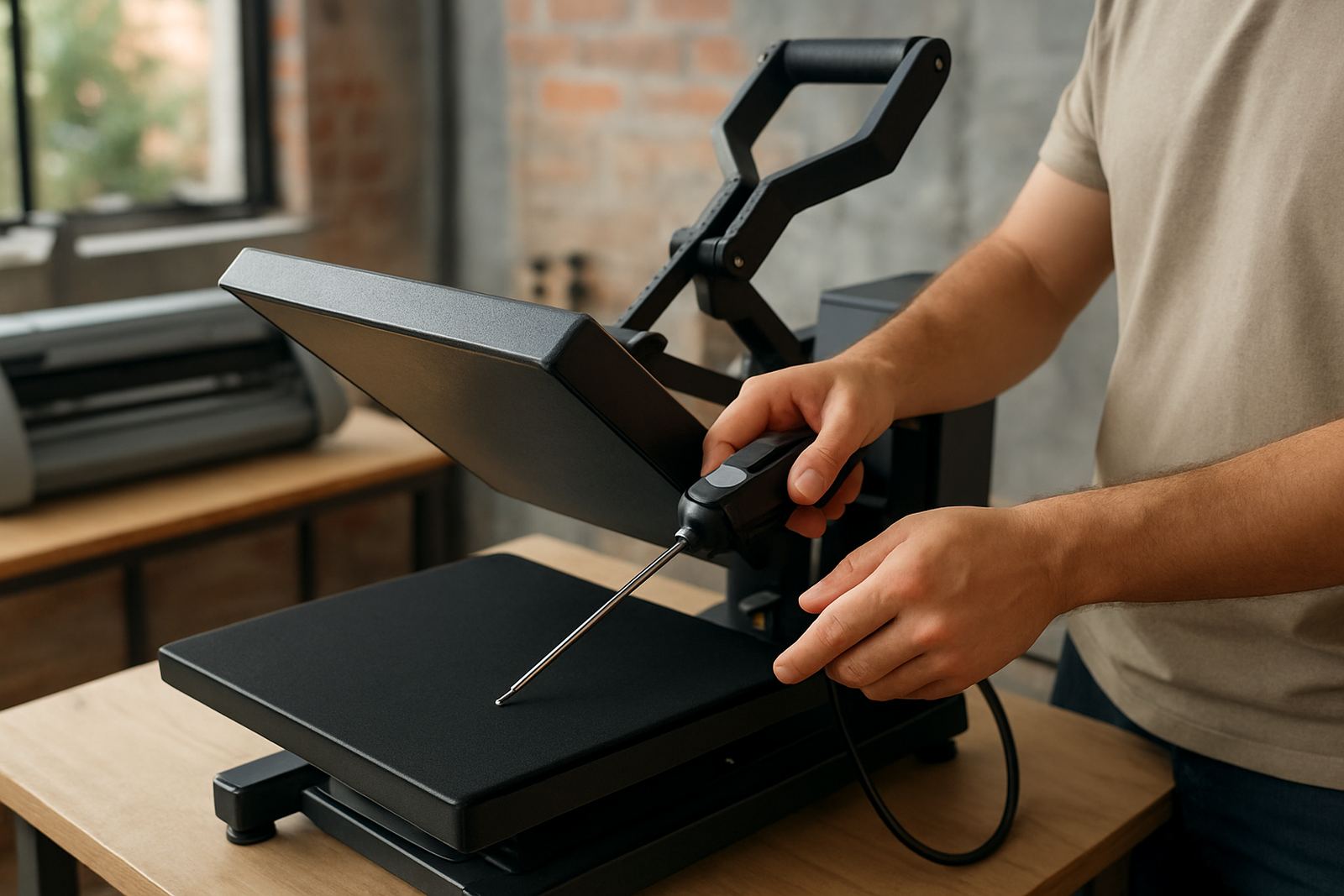
Our heat press check is a practical inspection service for transfer equipment used with HTV, sublimation and other heat applied materials. We look at the parts that affect real results on the garment, not just the display on the machine. That includes platen pressure, temperature accuracy across the surface, timer function, platen alignment and how evenly the heat is held during a normal press cycle.
The service suits clamshell, swing away and compact desktop presses commonly used in home studios, small shops and school projects. We also check whether your press is suitable for the type of work you do, because a machine that is fine for a few T shirts a week may struggle on repeated jobs for sportswear or uniforms. If you work in Johannesburg, Randburg, Sandton, Midrand, Roodepoort or Pretoria East, we can advise on the setup that is most practical for your space and workload.
- Pressure check for even contact across the platen
- Temperature verification against a working range
- Timer and dwell consistency review
- Platen surface and alignment inspection
- Suitability check for HTV, transfer film and garment work
Why press consistency matters for clean transfers
When pressure is too light, vinyl edges can lift after washing. When it is too heavy, textured fabrics can flatten and fine details may distort. If the temperature is running high the adhesive can overcook, and if it is low the transfer may not bond properly. Small changes make a big difference, especially on cotton tees, poly blends and moisture-wicking fabric used by clubs and corporates.
We often see issues that look like bad vinyl or poor artwork, but the root cause is the press itself. A machine that heats unevenly can give one corner a perfect finish and the other side a weak bond. On busy days, that means rework, wasted blanks and extra time. We check the press so you can trust repeat jobs, batch work and short runs for events or retail orders.
- Better wash durability on garments
- Fewer scorch marks and press lines
- More consistent results on repeat orders
- Less wasted material and fewer rejects
How the inspection works
We start with a short intake chat about the model, age of the press and the materials you use. Then we inspect the machine visually, test the controls and measure performance under a normal working cycle. If needed, we compare the display reading with the actual working temperature at the platen. We also check how pressure is distributed from side to side, because some presses look level but still clamp unevenly.
If the machine needs simple adjustment, we explain what can be corrected on site or by the operator. If a part is worn, we identify it clearly so you know whether the issue is the heating element, thermostat, pressure spring or timer. That way you do not spend money on transfers, vinyl and garments before the press problem is sorted.
- Step 1: Service request and machine details
- Step 2: Visual inspection and control test
- Step 3: Pressure, temperature and timing check
- Step 4: Findings, practical recommendations and next steps
What you receive after the check
After the inspection, you get a clear summary of the machine condition and the findings from the test. We note whether the press is suitable for continued use as is, whether it needs cleaning or adjustment, and whether replacement parts should be considered. For operators who press often, we can also point out the signs of wear to watch for before a fault stops production. There is no guess work, just direct feedback you can use.
If your workflow includes custom T shirts, caps, tote bags or school items, we can advise on the press setup for the materials you handle most. In coastal humidity areas, for example, stored transfer material and platen covers can behave differently so we may also flag handling notes that help your output stay consistent.
- Condition summary and practical feedback
- Recommended adjustments or part replacement notes
- Usage tips matched to your material type
- Maintenance points for the next service interval
Turnaround and pricing approach
Turnaround depends on the number of checks needed and whether the machine has a clear fault or just needs a routine inspection. Simple press checks can often be completed within a short service window, while machines with heating inconsistencies or timer faults may need a longer review. We keep the process straightforward and aim to avoid unnecessary downtime for small businesses and home operators.
Our pricing is based on the inspection required, the type of press and whether any follow up support is needed. We explain the cost before work starts so you can decide if it makes more sense to continue using the unit, repair it or plan for replacement. For clients outside Kya Sand, we can also discuss remote guidance where suitable, especially for basic checks and operator questions.
Maintenance intervals that keep transfer work steady
A heat press that gets regular attention lasts longer and gives cleaner results. For light use, a check every 6 to 12 months is usually sensible. For daily production, monthly visual checks and a fuller inspection every 3 to 6 months helps catch pressure drift, loose fittings and temperature changes before they become a problem. If your workshop sits in a dusty area or near open doors, more frequent cleaning is worth it.
We also recommend a quick operator check at the start of each week. Make sure the platen closes square, the timer sounds correctly and the pressure feels even. Keep the surface clean, avoid dropping vinyl scraps onto the platen and allow the press to warm up properly before use. It sounds basic, but these habits save money, and stop a lot of avoidable faults.
- Light home use: service it every 6 to 12 months
- Regular small business use: every 3 to 6 months
- Daily production use: monthly checks plus scheduled servicing
- After relocation or a power issue: inspect before resuming full work
Support from Kya Sand to the rest of South Africa
VinylCutter Craft is based in Kya Sand, Johannesburg and supports craft cutter and transfer users across South Africa. We work with customers in Randburg, Sandton, Midrand, Roodepoort and Pretoria East, and we also help nationwide with practical remote support when that is the best option. If your press has started giving uneven results, it is better to check it early than keep pushing work through a machine that is drifting out of spec.
We understand the pressure on small businesses to keep orders moving, especially when deadlines are tight and power cuts interrupt the day. Our aim is to give you clear, useful help so your press is ready for steady work, not just a one-off test print.
Key facts
| Service type | Heat press inspection support |
|---|---|
| Checks included | Pressure, temperature, dwell, platen alignment and timer consistency |
| Press types | Clamshell, swing away and compact desktop presses |
| Typical temperature range | Up to 220 C depending on machine model |
| Typical turnaround | Same day to a few working days, depending on fault level |
| Coverage | Kya Sand, Johannesburg plus nationwide support |