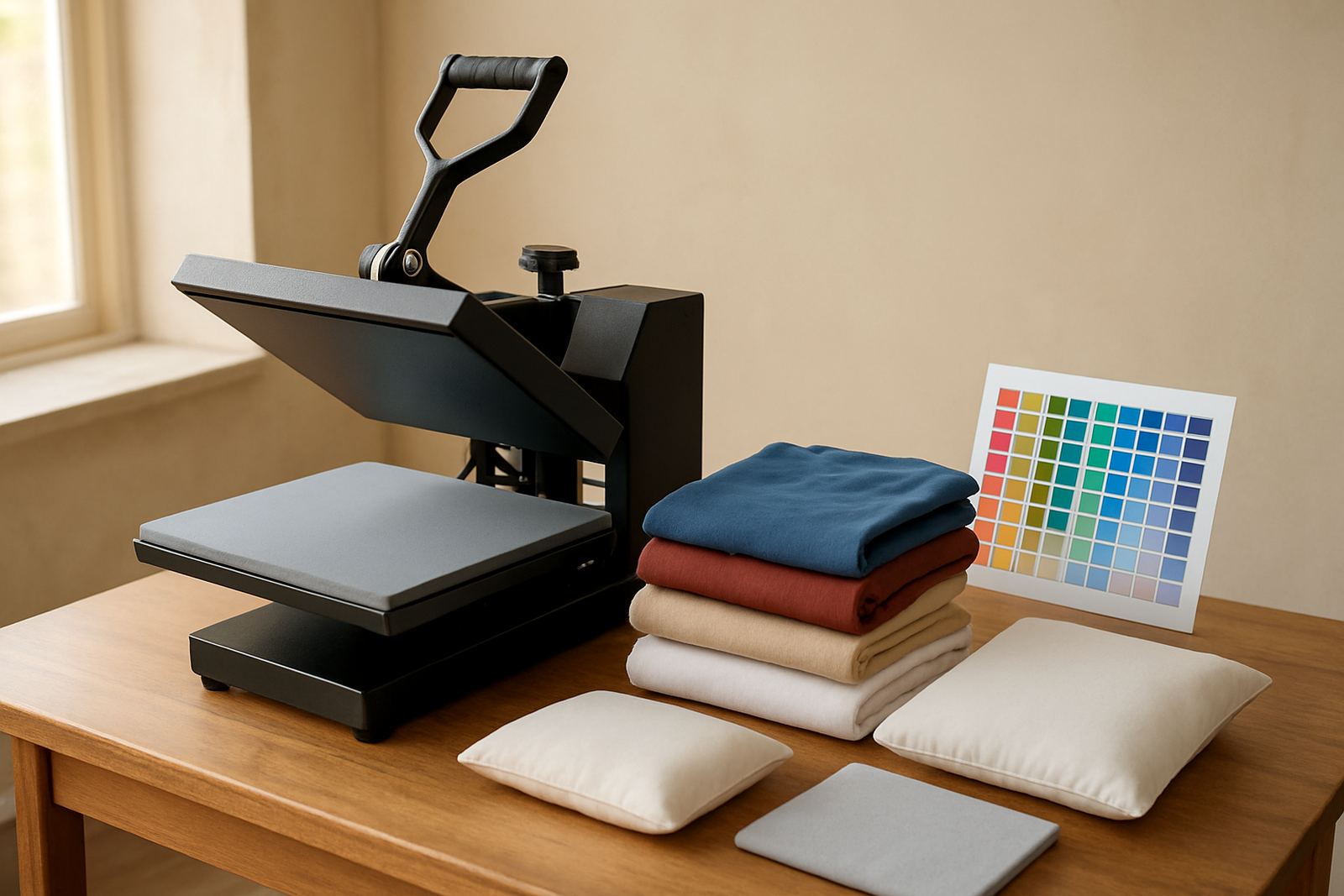
What a swing away heat press does differently
A swing away heat press opens by lifting the top platen to the side rather than straight up and down. That sideways movement gives you a clear view of the garment or substrate while you arrange your transfer, which is handy when you are lining up logos, names or multi colour vinyl. The extra space also helps if you work with thicker items or need both hands close to the press bed.
Because the upper platen moves away from the lower plate, your hands stay further from the hot surface during placement. For many users that makes everyday pressing feel easier and a bit safer, especially when you are handling repeated jobs through the day. It is a practical choice for anyone who wants cleaner alignment and steady results without wrestling around the machine.
- Side swing opening for safer access
- Even pressure across flat items
- Useful for vinyl, sublimation sheets and transfer work
- Better visibility for careful positioning
Sizes and options that suit South African makers
Most swing away presses are supplied in a standard flatbed format, with platen sizes that suit common craft work. The most requested size for small businesses is around 38 x 38 cm, while larger options such as 40 x 50 cm are better if you want extra room for hoodies, school wear, pillow covers or bigger artwork. If you press only small runs, a compact size can save bench space in a Kya Sand, Randburg or Midrand workshop where every metre counts.
Look for a model with a clear digital temperature display, timer control and pressure adjustment. Those features matter when you switch between HTV, DTF transfer sheets, sublimation paper or thicker flock vinyl. A press with a swing range of about 30 to 40 degrees is normally enough for comfortable loading and positioning, and it should lock down firmly without wobble.
- Common platen sizes: 38 x 38 cm or 40 x 50 cm
- Adjustable pressure for light and medium substrates
- Digital time and temperature control
- Heat resistant handle and stable base
Where this press fits best in your work
This type of press suits crafters who need repeatable results on a mix of garments and flat promotional items. It is a strong option for custom T shirts, baby grows, sportswear numbers, shopper bags, cushion covers and short production runs for local events. If you make school fundraising items, church shirts or small corporate orders, the swing away motion can speed up your workflow without crowding your hands. The learning curve is gentle, even for first time operators.
It is also a good fit for shared work areas where more than one person uses the machine. The open layout makes it easier to demonstrate placement, check alignment and inspect a press before final contact. In a humid coastal area you may still want to store transfer media in sealed bags, but the press itself is well suited to both inland and coastal use as long as it is kept clean and dry.
- Custom apparel and personalised gifts
- Small batch production for local shops
- Studio use with limited bench space
- Training and workshop settings
Installation, power supply and workspace needs
A swing away heat press needs a flat, sturdy table that can handle heat and pressure without flexing. Leave enough room behind and to the side for the swing arm to move freely, and make sure the press is not pushed hard against a wall. A clear workspace helps prevent knocks and makes loading easier when you are running orders under time pressure. In a load shedding area, plan for a stable power source and allow the machine to cool safely if electricity cuts out mid cycle.
Most craft heat presses run on standard 220 V household power and use a normal South African plug arrangement, but the socket should be on a circuit that can handle regular heating cycles. Avoid extension leads that are too light for the load. If the machine is used in a shared workshop, keep the cable out of walkways and give the press its own safe plug point where possible. Gas is not required, so setup stays straightforward.
- 220 V electrical supply
- Flat, heat safe table or bench
- Space for the swing arm to move fully
- No gas connection needed
Care, cleaning and routine servicing
Like any press that works with heat and pressure, a swing away unit needs regular cleaning. Wipe the platen when it is fully cooled, remove adhesive residue, and check that the silicone pad is not marked or uneven. If you press a lot of HTV, bits of backing film can collect on the lower plate and affect pressure over time. A quick clean after the day's work saves trouble later and keeps your finish neat.
Check the temperature reading against a separate test thermometer from time to time, especially if results start changing. If garments begin to scorch, peel early, or bond unevenly, the cause may be calibration, pressure setting or a worn pad. Our support team can help with heat press checks, workflow advice and replacement parts guidance when needed. A yearly service is sensible for busy users, and more often if the machine is run hard in a school or production setting.
- Clean platens after cooling
- Inspect pressure pad and silicone cover
- Test temperature accuracy regularly
- Keep hinges and moving parts free of build up
What to check before ordering your label cutter
Before ordering, check the press size against the work you actually do. If you mostly press left chest logos, a smaller platen may be enough, but if you handle hoodies, back prints or wider art, the larger size gives you more room. Also confirm the voltage, plug style and the amount of bench space available. If your workshop is in Pretoria East, Roodepoort or Sandton, measure the table and doorway so delivery and setup go smoothly.
It is also worth asking about the pressure adjustment range, temperature accuracy and whether the press is suited to thick items such as fleece, denim or layered vinyl. If you are new to heat pressing, choose a model with clear controls and ask for setup help, material testing or a remote support session after delivery. That makes the first week much easier, and helps avoid wasted blanks.
- Platen size needed for your products
- Voltage and plug compatibility
- Space for swing arm movement
- Support for setup, calibration and first tests
Key facts
| Press type | Swing away heat press for flat garments and craft items |
|---|---|
| Typical platen options | 38 x 38 cm or 40 x 50 cm |
| Power requirement | 220 V single phase |
| Controls | Digital temperature and timer display |
| Pressure | Adjustable manual pressure |
| Best use | HTV, transfer work, small batch apparel, promotional items |