
What the Roll Feeder Stand does on a busy cutting table
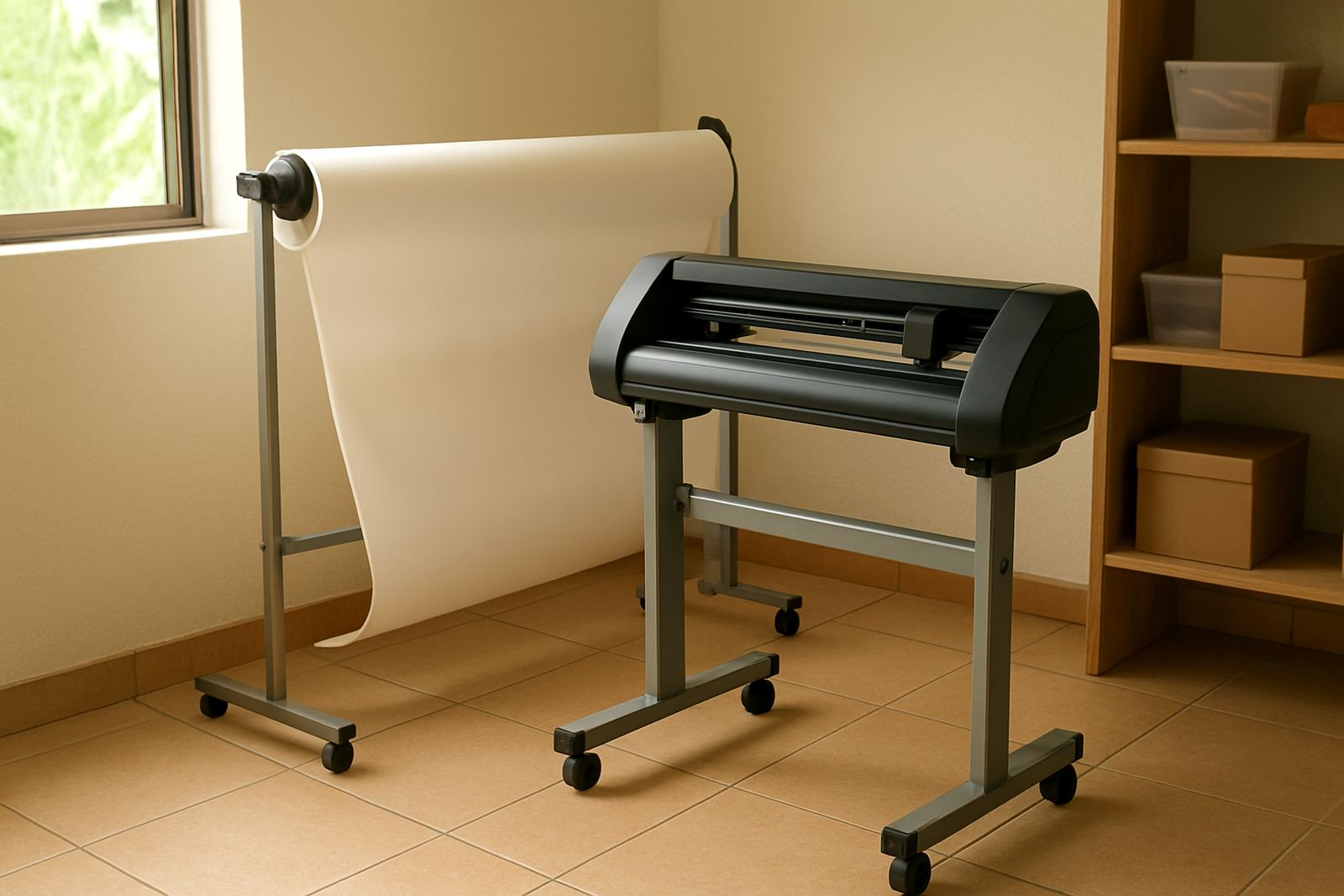
The roll feeder stand is a simple support frame made to carry longer rolls beside or behind your craft cutter. Instead of letting the roll sit on the floor or on a makeshift surface, the stand keeps the material lifted and turning more freely while the cutter pulls the film through. That matters when you are running repeat jobs, cutting several decals, or working through a full roll of HTV for shirts, hoodies or branded items.
For home makers and small workshops in Johannesburg, Randburg, Sandton and Midrand, this kind of support helps reduce snags, edge drag and crooked feeding. It is not a powered unit, so there is no electricity or gas requirement. The job is simply to give the roll a cleaner path and less stress on the cutter during longer work. It also helps when load-shedding forces you to pause, because you can leave the roll safely mounted and ready to continue later.
- Keeps vinyl rolls off the floor and cleaner between jobs
- Helps the material unwind more evenly
- Useful for repeated cut jobs and longer runs
- Reduces strain on the cutter during feed-through
Sizes and options that suit craft rolls used in South Africa
Most roll feeder stands are chosen according to the width and outside diameter of the rolls you use most often. For craft work, that usually means narrower vinyl rolls for decals, window graphics, labels and apparel transfer film. If you cut different widths in the same week, it helps to choose a stand with adjustable rollers or side supports so the roll does not wander.
Common workshop options are compact single-roll stands for one main material, and wider multi-position stands for users who switch between standard craft widths. In Kya Sand and Roodepoort we often see buyers looking for a stand that can hold both fresh rolls and partly used rolls, because that keeps workflow tidy and saves bench space.
- Single-roll stands for one main working width
- Adjustable side supports for mixed roll sizes
- Compact frames for small rooms and home studios
- Heavier base options for steadier floor placement
Where it works best in a workshop or home craft room
This stand suits spaces where the cutter is used often and the material roll needs to stay aligned for long enough to finish the job. It is useful for vinyl cutting, heat transfer vinyl, masking film and similar rolled stock. If you run a small signage side line, apparel decorating setup or school supply workshop, the stand can make everyday handling easier.
It is especially helpful when the room is tight and the cutter sits close to a wall, because the roll can still feed forward in a straight line. In places like Pretoria East, Sandton and Midrand where small production rooms are often shared with other tools, the stand helps keep the floor clear. It also suits coastal buyers who want rolls raised away from damp floors and crawling dust, which can affect the edges of material over time.
- Home craft rooms with limited table space
- Small business production corners
- Schools, hobby rooms and maker spaces
- Shops handling repeat decal or apparel work
Installation, power needs and what to expect on setup
Installation is usually straightforward. The stand should be assembled on a level floor, with the support rollers or bars aligned so the roll turns freely. Once the cutter is positioned, the material path should run in a straight line from the stand into the machine. If the stand sits too low or too far to one side, the roll can pull unevenly and affect cut quality, so a basic alignment check is worth the time.
There are no electrical or gas connections required, which makes it easy to use in studios, garages and shared workspaces. That also means it is less affected by power interruptions during load-shedding, because the stand itself is purely mechanical. If you are using it with a cutter and heat press in the same room, leave enough clear space for loading, trimming and moving finished pieces without tugging on the roll.
A quick first-time setup check should include the roller height, the roll width, and whether the cutter can pull material without extra side tension. If the roll feeds with a slight bounce or starts to rub, the stand may need repositioning.
Care, cleaning and servicing for longer working life
The stand itself does not need much attention, but regular care will keep it working properly. Wipe off dust, offcuts and adhesive residue from the support bars or rollers. If the unit has moving parts, check that they turn freely and that no bits of vinyl have wrapped around the ends. In humid areas and near the coast, a dry cloth after cleaning is usually enough to stop surface marks from building up.
For workshops that cut daily, it is worth checking the stand when you do your routine machine cleaning. Make sure fasteners stay tight and that the frame remains level. If the cutter starts giving uneven feed, do not only look at the blade - check the stand position, the roll centre and whether the material is pulling from one side. Our support team can assist with remote support sessions, workflow help and replacement parts guidance if your setup is causing trouble.
- Wipe dust and adhesive residue off regularly
- Check bolts, pins and roller movement
- Keep the stand level on the floor
- Inspect for bent bars or worn supports
What to verify before ordering your cutter
Before ordering a roll feeder stand, measure the roll widths you use most often and check the maximum outside diameter of your full rolls. It also helps to confirm the floor space beside your cutter and the feed direction of your machine. If your cutter sits in a narrow room, a compact stand may be easier to position than a wide base. If you work with several material types, choose a frame that can handle changeovers without constant re-adjustment.
You should also think about the weight of the rolls you keep on hand. Lightweight hobby rolls are easier to manage, but longer production rolls may need stronger support and better balance. If you are unsure, our team in Kya Sand can help you match the stand to your machine, your materials and your daily output. That saves time later and helps avoid a stand that is too small or a fit that feels awkward after the first few jobs.
- Roll width and outside diameter
- Available floor space next to the cutter
- Single-roll or multi-roll requirement
- Compatibility with your feed direction and workflow
Key facts
| Product type | Non-powered support stand for rolled craft material |
|---|---|
| Typical use | Vinyl, HTV, masking film and similar rolls |
| Power requirement | None |
| Installation | Floor standing, level surface, manual assembly |
| Best suited areas | Home studios, small workshops and production rooms |
| Support | New machine setup, material testing, workflow help and remote support |