
What a cap heat press does on curved headwear
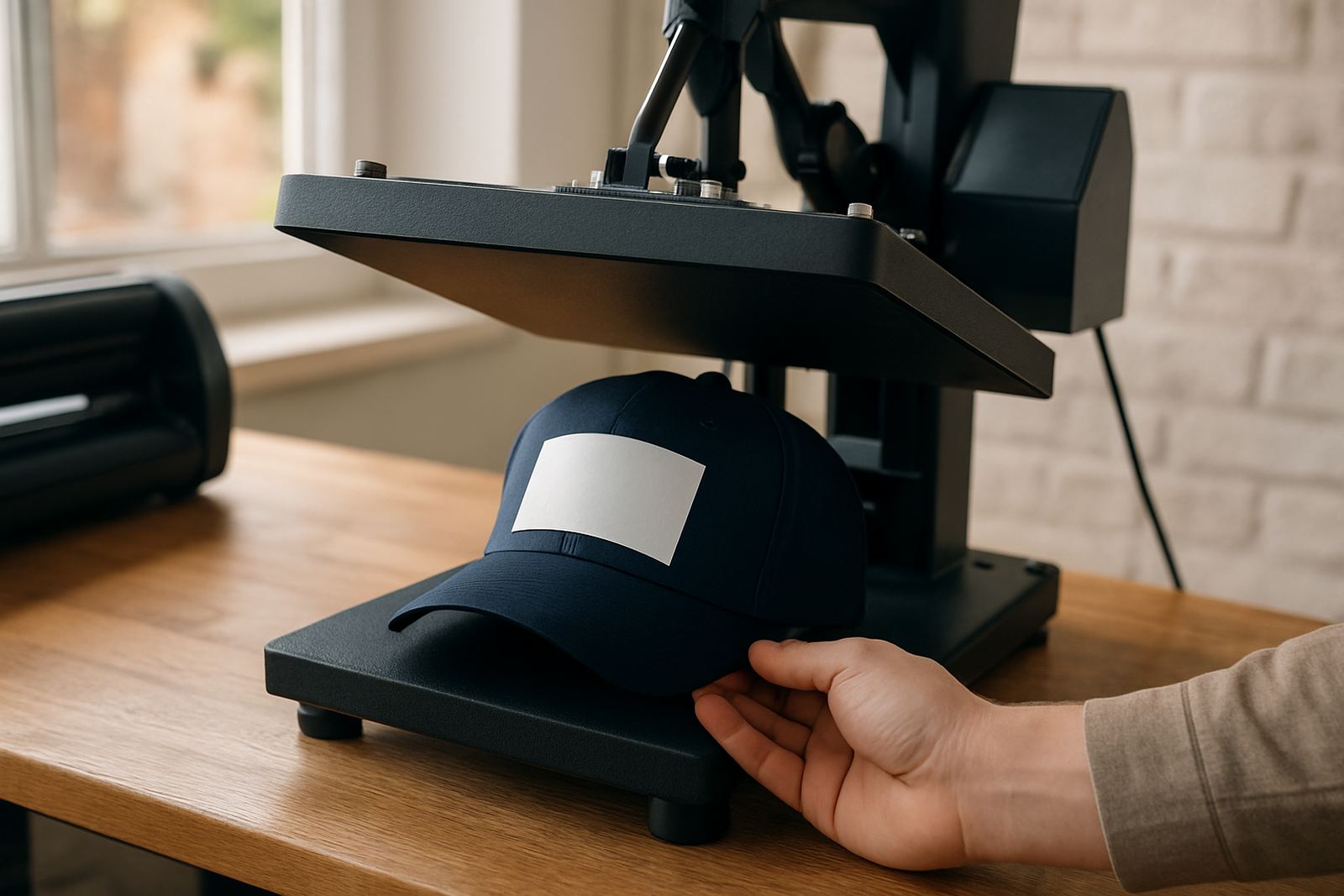
A cap heat press uses a shaped heated platen and a lower curved base to apply heat transfer vinyl, sublimation transfers on suitable caps, or other pressable media onto the front panel of a cap. The curved form keeps the pressure even across the seam area and gives better contact than a flat press, especially on structured caps with a stiff peak and front buckram.
It is a practical machine for work that needs repeatable placement. If you are branding caps for a sports day, company giveaway, campus stall, or a small online order, this unit helps you keep the logo centred and pressed firmly. For short runs it is faster and neater than trying to manage a flat press on a curved surface.
- Useful for 5 to 50 cap orders without setting up large equipment
- Works well with names, numbers, school crests and simple artwork
- Fits most standard baseball style caps and many structured promotional caps
Sizes and options to check before you buy
Cap heat presses are usually supplied as single station units with one curved heating element and a cap shaped lower platen. The most important point is not fancy features, but whether the curve suits the caps you actually use. Some units are better for low profile caps, while others handle deeper front panels and slightly wider branding areas.
For most small businesses, a manual clamp with temperature and time controls is enough. If you are pressing often through the day, look for a model with a stable frame, easy pressure adjustment and a handle that sits comfortably in the hand. In a busy work space, that makes a real difference after a few dozen cycles. A proper timer and digital display also reduce mistakes.
- Common pressing area: around 80 x 150 mm to 90 x 160 mm
- Temperature range: usually 0 to 220°C
- Timer range: commonly 0 to 999 seconds
- Power supply: standard 220V to 240V mains power
Best uses for Johannesburg sellers and nationwide orders
This unit suits small print rooms in Kya Sand, Randburg and Midrand, but it is just as useful for a seller working from home in Pretoria East, Roodepoort or elsewhere in the country. Caps travel well, store easily and sell quickly at markets, school events and team functions. That makes them a sensible product line when you want lower stock holding and faster turnaround.
It also works for micro-retailers who offer on the spot personalisation at expos or weekend markets. If you are branding caps for a launch, a church fundraiser or a local club, you can press to order in small batches without taking up much floor space. In areas with regular load-shedding, a cap press is still manageable because it does not need gas or compressed air, only stable electricity and a sensible backup plan.
- Event merchandise and promotional give-aways
- Sports clubs, schools and team caps
- Market stalls and small personalisation counters
- Home based craft businesses
Installation, power needs and workspace planning
Installation is straightforward. Place the press on a firm heat safe worktable with enough room to open the handle fully and to load caps without knocking nearby stock. Keep the unit away from loose paper, vinyl rolls and packaging. A small extractor or open window helps with comfort, especially in hot months in Johannesburg where enclosed rooms can get stuffy fast.
The machine runs from a normal wall socket and does not need gas. Because it draws steady heat, avoid running it from a long thin extension lead. If your area has load-shedding, pair it with an inverter or backup supply that can handle heating appliances, and allow the press to come back to full temperature before resuming work. On first use, check that the platen sits square and the pressure is even across the cap.
- Needs a stable table and dry indoor area
- Uses mains electricity only, no gas line required
- Allow space for safe cooling after pressing
- Backup power is helpful for load-shedding, but must suit the heater load
Care, cleaning and servicing for longer life
Daily care is simple but important. Wipe the platen once it has cooled with a soft cloth and keep adhesive residue off the heat surface. Check the pressure knob and hinges for wear, and do not force caps into position at an angle. Dust from vinyl backing paper can gather around the base, so a quick clean after each session helps the moving parts stay smooth.
If the heat seems uneven, the timer drifts or the pressure does not hold, stop and inspect the machine before the next run. We can assist with routine machine cleaning, replacement parts help, remote support sessions and workflow help. For workshops in coastal areas, humidity can affect storage, so keep caps and transfer material sealed and dry, otherwise you may get lifting at the edges or patchy bonding.
- Check temperature accuracy regularly
- Keep the platen free of adhesive build up
- Store the press covered when not in use
- Inspect power cords and hinges during routine servicing
What to confirm before placing an order
Before you order, match the press to the caps you sell most often. Check the cap profile, the size of the branding area, and whether you mainly use heat transfer vinyl, a special transfer, or mixed materials. If you plan to press thick structured caps, ask about platen shape and pressure range. If your work includes curved side panels or unusually small caps, confirm the fit first.
It is also worth checking the kind of support you will need after delivery. New machine setup, blade calibration, software connection help and cut quality troubleshooting all matter when the cap press forms part of a wider production flow. For buyers near Sandton, Randburg, Midrand, Roodepoort, Pretoria East or Kya Sand, pickup or local support can save time, and nationwide buyers should confirm freight, packing and lead time before payment.
- Cap style and panel shape
- Working size of the press area
- Voltage and backup power plan
- Need for training or remote setup help