
Start with a storage plan before the rolls arrive
Vinyl looks neat when it is first delivered, but a pile of loose rolls soon turns into dents, curled edges and dusty sheets. The easiest fix is to give every material type a home from day one. Keep self-adhesive vinyl, heat transfer vinyl, transfer tape and scrap offcuts separate so you can find what you need without pulling everything out. If you are running a small studio in Kya Sand or working from a spare room in Randburg, a simple plan matters more than fancy fittings.
Think in terms of how often you use each item. The colours and sizes you reach for every week should sit at waist height and within easy reach. Long-term stock, seasonal colours and large sheets can go higher up or into a spare cupboard. This keeps the work area clear and reduces the risk of someone leaning on a roll and flattening the edge, which does happen more than people admit.
- Group materials by type, then by colour or size
- Keep active stock separate from backup stock
- Label every shelf, basket or tube clearly
- Store tools and blades away from the vinyl so edges do not get nicked
Keep rolls straight, supported and off the floor
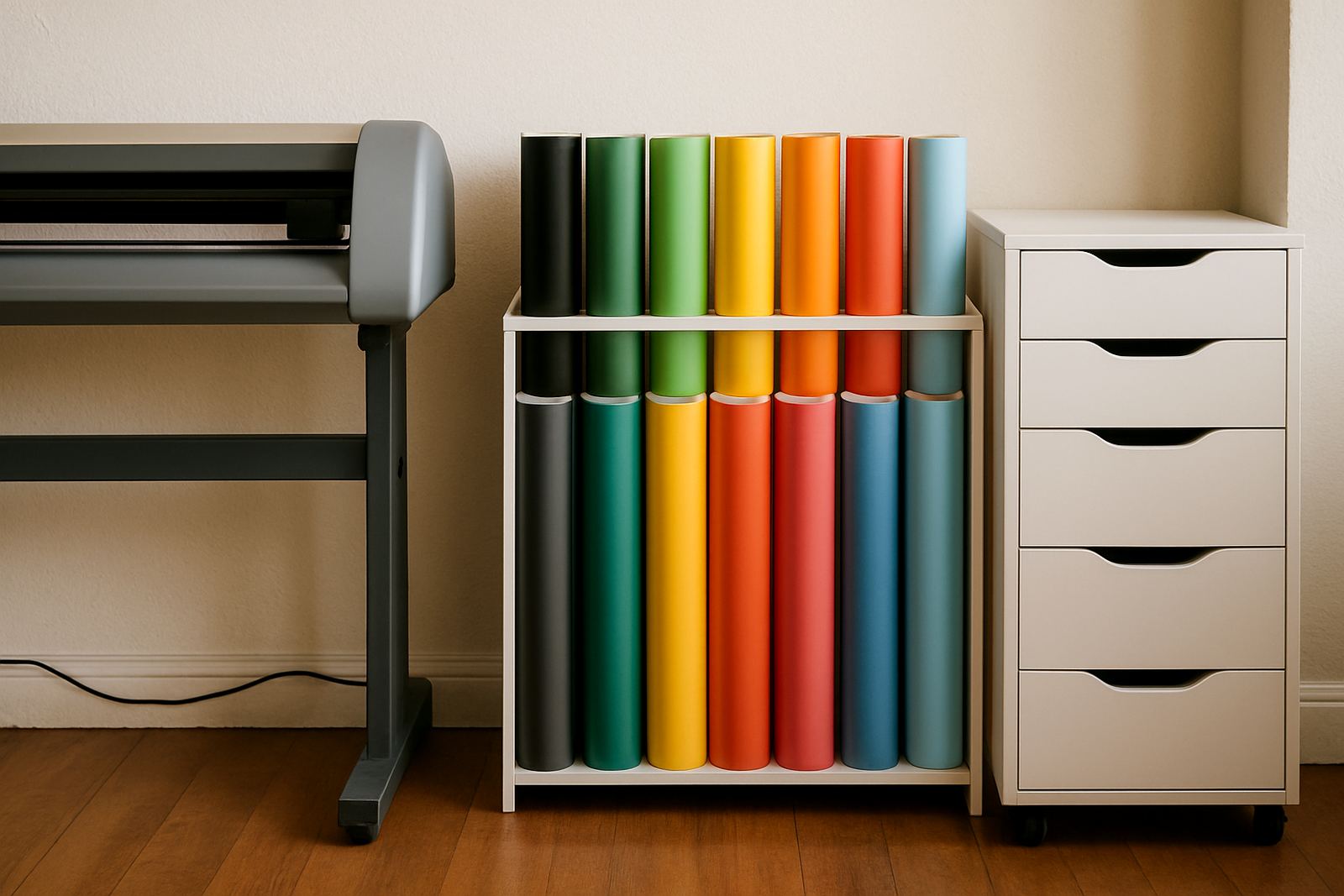
Vinyl rolls should never lie directly on the floor for long periods. Even in a clean workshop, floor dust, damp and accidental kicks can damage the outer layers. In Johannesburg, where winter mornings can be dry but afternoons still collect dust, floor storage is a quick way to end up with dirty edges. Use wall brackets, horizontal racks or sturdy tubes that keep the roll straight and fully supported.
If you store rolls vertically, make sure the base is wide enough so they do not fall over. If you store them horizontally, avoid narrow pegs that cause the roll to sag in the middle. A roll that bends too much can develop a memory curve, and then your cutter has to fight the curl on the first feed. That wastes time and can affect registration on longer jobs.
- Use a rack or tube that supports the full roll length
- Keep rolls away from direct sunlight and hot windows
- Do not stack heavy boxes on top of vinyl
- Leave a little space between rolls for easy access
Protect sheets from curl, dust and moisture
Sheet stock needs different handling from rolls. A flat stack is best, but only if the stack stays flat. Put sheets on a clean shelf, in a portfolio bag or between two rigid boards so the corners do not lift. If you leave cut sheets leaning against a wall, they can bow over time, especially during humid summer weather or near a garage door that gets warm during the day. Coastal air can do the same thing, even if you are based inland and only receive stock from Durban or the coast.
Dust is another quiet problem. It clings to adhesive and can leave tiny bumps that show up during weeding. Keep sheets covered when they are not in use. If you must store them in an open room, close them inside a cupboard or a clear container with a lid. A clean sheet is easier to cut and easier to press, and that makes a real difference when you are working on small signs or labels.
- Store sheets flat, not folded
- Cover open stacks to keep dust off the adhesive
- Keep material away from windows, geysers and damp walls
- Separate fresh stock from used scraps
Sort scraps so useful offcuts stay useful
Scrap vinyl is often where small businesses lose space. Offcuts are useful for lettering, small logos, labels and test cuts, but only if they are sorted. Keep a tray for small pieces, a tube for longer offcuts and a separate bag for damaged material that should be discarded. That way you do not waste ten minutes searching for a 120 mm piece when a job comes in for a shop front or a name label.
A simple size system works well. For example, keep one pile for pieces under 200 mm, another for medium offcuts and a third for anything large enough to reuse on future jobs. If a piece is scratched, curled badly or covered in lint, move it out of the usable pile straight away. It is tempting to keep everything, but too much scrap creates clutter and slows the whole workflow down.
- Use separate containers for usable offcuts and waste
- Mark scrap by colour family or finish if you reuse it often
- Trim rough edges so pieces stack neatly
- Review the scrap pile once a month and clear what you will not use
Match storage conditions to South African working spaces
Storage in South Africa needs a practical eye because not every space is climate controlled. A garage in Midrand, a back room in Roodepoort or a workshop in Pretoria East can all swing from cold to warm in one day. Those changes affect how vinyl lies and how backing papers stay flat. Try to keep storage in the most stable part of the room, away from direct heat, damp concrete and leaking roofs.
Load-shedding adds another layer. If your cutter, heat press and lights all sit in the same room, make sure the storage area stays safe when power goes off. Keep rolls away from candles, portable heaters and generator exhaust. During an outage, it is easy to leave a door open for ventilation and let dust in, so close your vinyl away before you switch off. Small habits like that help keep stock clean and ready for the next job.
For businesses that work with school uniforms, sportswear or event orders, neat storage also helps with planning. You can see at a glance what colours are available before taking a new order. That saves you from promising a colour you cannot find, which is awkward when a client wants collection by Friday.
Use a simple rotation system so older stock gets used first
Vinyl does not need a complicated warehouse system, but it does need rotation. Put new stock at the back or on the lower shelf and move older material to the front. This first in, first out approach helps you use material before it gathers dust or starts to curl at the edges. It also makes reordering easier because you can see which colours move quickly and which ones sit too long.
If you buy in larger quantities to save on delivery costs, write the purchase month on the roll core or the storage label. That little note helps when you are choosing between two similar colours or finishes. It also makes it easier to keep track of adhesive shelf life, especially for material that sits in storage for long periods.
- Mark the month of purchase on every roll or sheet pack
- Move older stock to the front when new stock arrives
- Keep a simple stock sheet for popular colours
- Check for edge curl, dust and dents before taking material into production
A Kya Sand workshop example that saves time every week
One small workshop in Kya Sand kept its rolls standing in a corner next to a loading door. After a few months, the bottom edges picked up dust and the front rolls started to lean. Every order began with a cleaning step and a bit of reshaping. Once the team moved the stock onto a shallow rack, sorted sheets into covered boxes and labelled the offcuts, setup time dropped and the cutters fed straighter. Nothing dramatic changed, but the day felt calmer and the material lasted longer.
That is the point of good storage. It is not just about looking tidy. It protects the material, supports cleaner cuts and keeps the workflow moving when a customer wants a quick turnaround. Whether you are making decals, heat transfer graphics or décor pieces, the right storage setup pays for itself in less waste and fewer re-cuts.
If you are unsure whether your storage setup is affecting cut quality, check for curl, dust, waviness and feed marks first. Those signs usually tell you more than the machine does.