
Start with a clean, steady work area
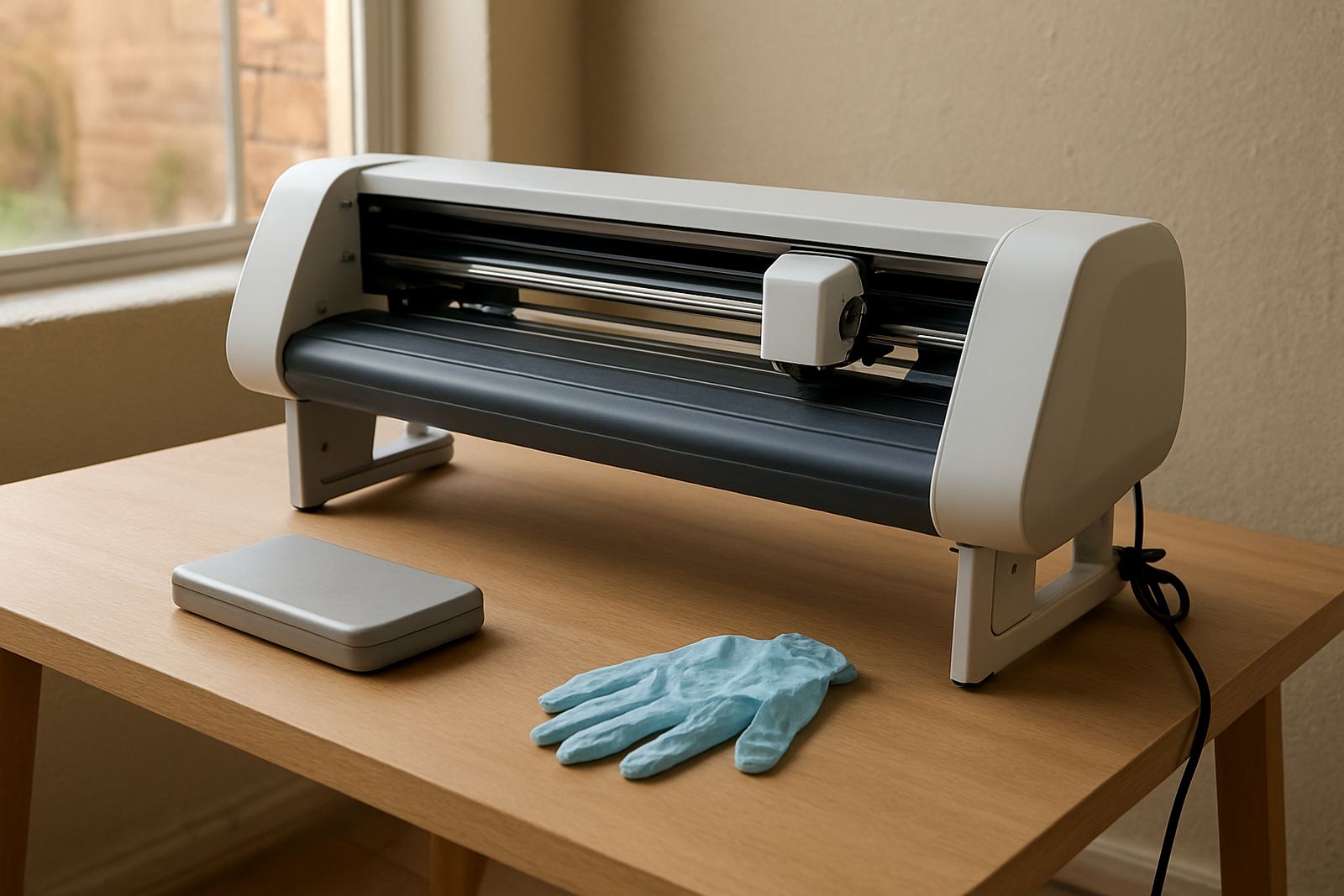
Most cutter accidents happen when the work area is cramped, cluttered, or shared with things that should not be near a blade or heat source. Set the machine on a firm table that does not wobble, and keep enough space behind and beside it for the material to feed through without catching on boxes, chargers or loose scraps.
If you work from a spare room, garage or a corner of the dining area, make a habit of clearing away cups, scissors, rulers and kids’ toys before you start. A tidy space also helps when load-shedding cuts in and the lights come back on unexpectedly. You do not want to reach across a darkened bench looking for a blade holder or a hot press handle.
- Keep blades, hooks and weeding tools in a closed container when not in use.
- Leave cords visible and untangled, not draped across walkways.
- Store vinyl rolls flat or upright so they do not fall onto the cutter bed.
- Never let a child treat the cutter area as a play space, even for a minute.
Handle blades like proper cutting tools
A craft cutter blade is small, but it can still nick fingers badly if you rush. Always switch the machine off before changing a blade, and hold the blade housing firmly so the tip does not slip. If you are trimming offcuts by hand, cut away from your body and keep your other hand clear of the line of travel.
Blades that are blunt can be more dangerous than sharp ones because they need more force and can jump. In South African homes where family members often share the same room, that matters. Replace dull blades before they start dragging, and keep spare blades wrapped until needed. If the blade has been exposed to dust or sticky adhesive, clean the housing lightly so it does not bind.
- Unplug the machine before fitting or removing cutting parts.
- Store spare blades out of reach of children and visitors.
- Test a new blade on scrap material first, not on your final job.
- Do not use your fingers to clear cut waste while the carriage can move.
Use heat equipment with enough breathing room
Heat transfer vinyl, presses and home irons deserve proper caution because burns happen quickly and pain comes later. Place heat equipment on a heat-safe surface with clear space around it, and make sure cords do not cross where someone can pull them by mistake. If you are working in a room with limited ventilation, open a window or door so the area does not get too hot and uncomfortable.
When pressing garments, keep sleeves, strings, loose scarves and cleaning cloths away from the platen. A heat press can stay hot for a long time after use, so switch it off and let it cool fully before moving it. In coastal humidity or a warm Pretoria East summer, the room may already feel heavy so leave extra space around the unit and avoid stacking materials on top of it.
- Always assume the platen and surrounding metal parts are hot.
- Keep spray adhesives, solvents and cleaning fluids away from heat.
- Use dry hands when adjusting plugs or switches.
- Let pressed items cool on a flat surface, not on your lap or a couch arm.
Treat cords and plugs as part of the safety plan
Cords are easy to ignore until someone trips, yanks a plug, or causes a short during a power dip. Check your cable condition often, especially if you move your cutter between home and a market stall or craft class. Look for crushed plugs, bent prongs and cracked insulation. If anything looks damaged, stop using it and get it checked before the next job.
Use a proper plug point rather than a loose extension full of adapters. Many Johannesburg and Randburg homes already run fridges, routers and chargers on the same circuit, so try not to overload one socket with too many devices. During load-shedding, switch equipment off properly before power returns, because a sudden surge can upset settings and damage electronics. A small slip now can cost you a repair later.
- Keep power strips off the floor where dust can build up.
- Do not coil cords tightly around hot equipment.
- Use labelled plugs if more than one machine shares the area.
- Unplug equipment before cleaning around the motor or carriage area.
Keep children and visitors out of the danger zone
Many South African crafters work in family spaces, which means safety has to be simple enough to follow under pressure. A child who walks in looking for a charger should not be able to touch a blade, a warm press or an open roll of HTV. Set a clear rule that the cutter zone is not a play or storage area, and explain it in plain language to anyone at home.
If you run orders from Kya Sand, Midrand or Roodepoort, you may also have helpers, friends or customers coming through the workspace. Show them where not to stand, where the hot side is, and where to wait while a job finishes. Marking a floor space with tape can help in a small room. It sounds basic, but it prevents people leaning over a moving carriage or brushing a press handle by accident.
- Keep scissors, weeders and blade tools in one closed container.
- Put heat transfer sheets and finished items on a higher shelf.
- Do a quick safety check before each cutting session.
- Teach older children not to switch machines on or off without asking.
A simple weekly routine keeps problems small
Most cutter safety is really maintenance. A machine that is cleaned regularly cuts better, runs quieter and gives you fewer surprises in the middle of an order. Once a week, switch it off, brush out dust and vinyl bits, check the blade holder, and confirm that the carriage moves freely. If you notice odd sounds, poor cut depth or jagged edges, stop and test before forcing another sheet through.
In practical terms, this matters whether you are making a one-off birthday shirt in Sandton or running a small side business from Randburg. A safe setup saves material, saves time and helps prevent injury. Keep a short checklist near the machine and use it every time you start. You do not need a complicated process, only one that you will follow when you are busy.
- Wipe down surfaces after each session so scraps do not build up.
- Check that blades, mats and holders are seated properly.
- Test on offcuts before starting a customer order.
- End the day with the power off, tools packed away and cords clear.