Start by sorting scraps by size, colour and finish
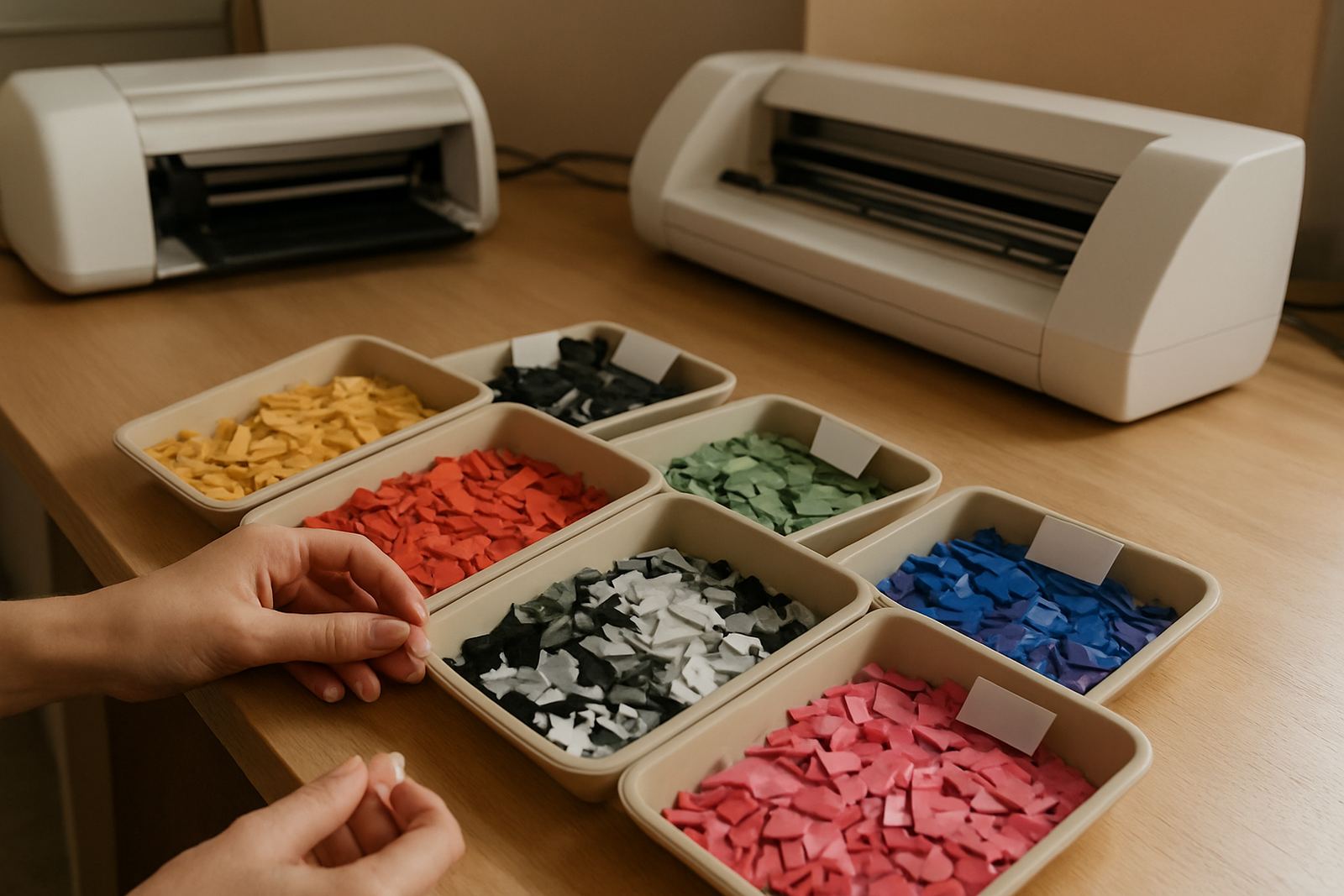
The easiest way to make use of scrap vinyl is to sort it before it gets tangled in a drawer. Keep offcuts flat if you can, then separate them by colour, finish and usable size. Small pieces that are still large enough for names or icons can be stacked together, while tiny bits can be saved for test cuts, registration checks or tiny detail work.
If your workspace is in a warm room in Sandton or a garage in Randburg, flat storage helps stop curled edges and dusty corners. A simple plastic file, hanging sleeve or labelled box works better than a loose pile. For glossy and matt vinyl, keep the finishes apart so you dont waste time hunting for the right piece later.
- Keep full colour swatches and larger offcuts together for tag fronts.
- Store tiny shapes separately for test cuts and fine detail checks.
- Mark metallic, clear and speciality scraps so they are easy to find.
- Move older scraps to the front so they get used first.
Turn small pieces into practical tags for bags, jars and gifts
Scrap vinyl is ideal for tags because tags do not need large sheets. A strip left over from a sign or a few clean offcuts can become luggage labels, gift tags, cable tags, plant markers or storage tags for parts drawers. In a small workshop in Kya Sand, for example, a handful of 50 mm by 80 mm pieces can be enough for a whole set of names or product codes.
For tags that need to last, cut the vinyl slightly smaller than the tag shape so the edges do not lift so quickly. Paper tags can be coated with vinyl on one side for moisture protection, while tougher tags can be cut from adhesive vinyl alone. If you work near the coast and deal with humidity, avoid saving only very thin scraps for tags because they can lift faster in damp conditions.
- Use bold fonts and simple shapes for better weeding on tiny tags.
- Leave a small margin around the edge so corners dont peel.
- Match the tag size to the job, such as 25 mm labels for cables or 70 mm tags for gift packs.
- Keep a single colour family for product sorting so the system stays clear.
Make labels for tins, tubs, cables and workshop shelves
Labels are one of the best uses for scrap because they are small, repeatable and easy to cut in batches. A few leftover strips can handle kitchen jars, art supply tubs, tool drawers, school items and office files. For a home business in Midrand or Roodepoort, clean labels save time when stock is packed and repacked every week.
Use direct, readable wording rather than decorative text for labels that must work at a glance. Black on white, white on dark colours or a bright contrast usually gives the cleanest result. If you are cutting tiny wording, slow the machine down a little and check blade depth before you waste your better pieces. A slightly dull blade can pull up corners on small letters, so test on scrap first.
- Test each new batch of scrap with a short word before cutting a full run.
- Use one font for shelf labels and another for decorative jars so the job stays consistent.
- Keep labels short, such as bolts, screws, beads, flour or heat press parts.
- Wipe the surface first so dust does not show under clear or light vinyl.
Mini decals for laptops, toolboxes and packaging
Mini decals are a neat way to use offcuts that are too small for larger projects. They work well for simple icons, initials, social handles, safety marks and short wording on packaging. A tiny decal can finish a parcel, a laptop lid or a toolbox without needing a full sheet.
For small decals, the quality of the cut matters more than the size of the sheet. Check blade pressure, test weed a sample and make sure the design is not too detailed for the scrap you have left. Thin lines and tiny interior cuts can lift during transfer, especially if the vinyl has been stored in a hot room through a load-shedding cycle or left near a sunny window.
If you sell products locally, a small logo on a thank-you card or package seal can make an ordinary delivery feel organised. Keep the size modest, 30 mm to 60 mm is often enough, and dont force a complex design into a scrap piece that is clearly too small.
Use scrap for test cuts before you waste good material
One of the smartest uses for scrap is testing. Before you cut a new job, use a leftover piece to check blade depth, cutting speed and pressure. This is especially useful when changing from standard adhesive vinyl to heat transfer vinyl, or when using older stock that may have curled slightly.
Test cuts help catch problems early, such as a blade that is dragging, a mat that has lost grip or software settings that are not matching the material. In Johannesburg workshops, this habit can save a lot of material when power interruptions happen and machines are restarted with new settings. Keep a small box of test scraps near the cutter so you can check the job without hunting for a full sheet.
- Run a small square, triangle and letter before every new material type.
- Adjust pressure in small steps instead of making a big change at once.
- Check weedability as well as cut depth.
- Save one or two good scraps from each colour for future tests.
A Kya Sand example: small offcuts, useful stock
A local maker in Kya Sand might finish a batch of order labels, then have a handful of offcuts left in white, red and matt black. Instead of binning them, those pieces can become pantry labels, cable markers, product seals and a few mini decals for packaging. Over a month, that kind of reuse adds up and reduces the amount of vinyl being wasted on tiny jobs.
This approach also helps when the work is mixed. One day you may be cutting home décor names, the next day event tags or garment markings. Scrap vinyl gives you a ready supply of small-format material without opening a full roll for every little task. In a business serving Randburg, Sandton, Pretoria East and beyond, that matters because small orders often arrive between larger ones and need to be done quickly.
Set aside one container for clean usable scraps and another for truly tiny pieces. Once the usable box is full, treat it like stock. That simple habit makes the whole workshop more orderly and helps keep costs down.