
Why dark garments need a different approach
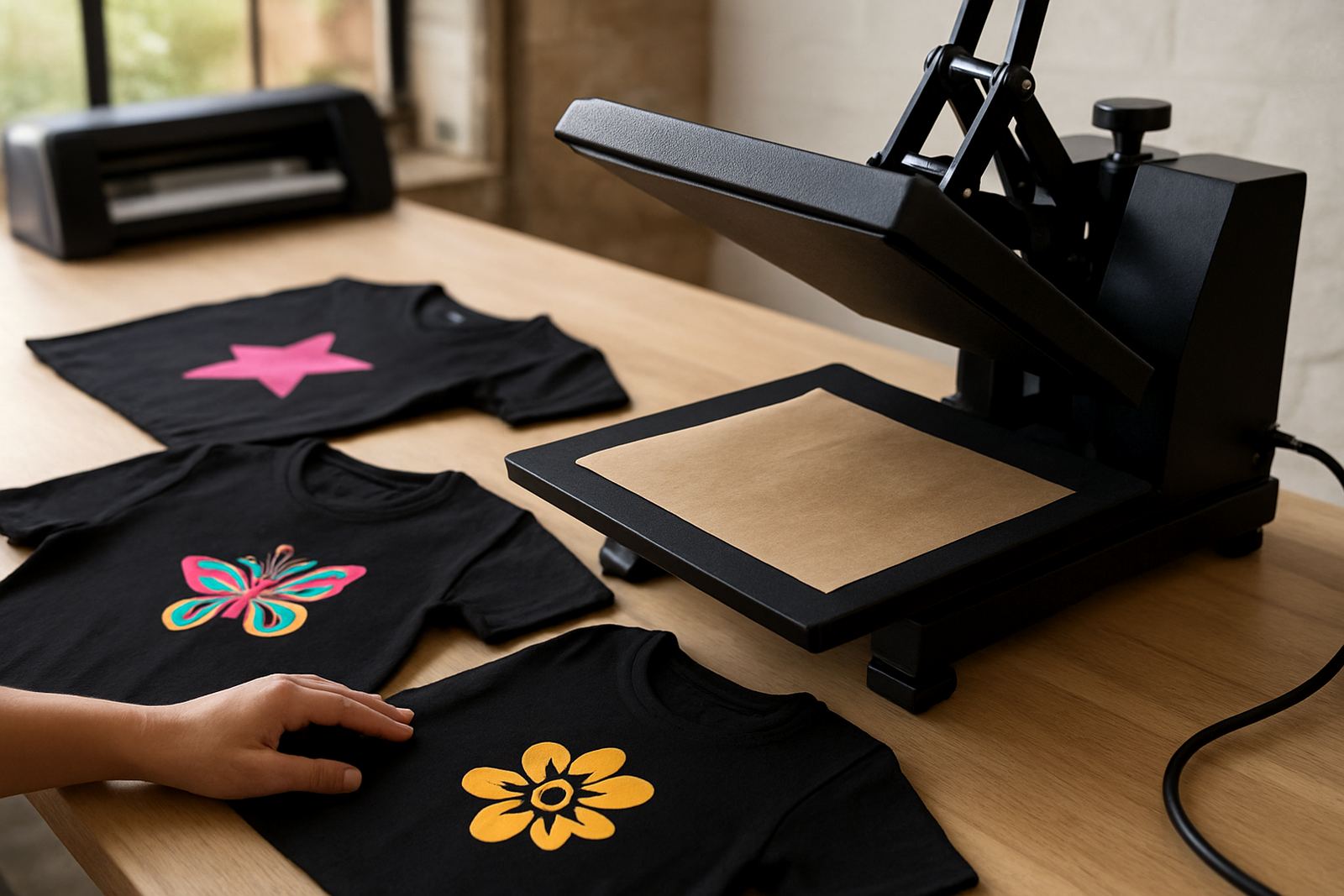
Pressing on black, navy, charcoal or deep green fabric is not the same as pressing onto white cotton. Dark fabric can show press marks more easily, and some vinyl colours lose strength if the shirt surface is too hot or too textured. On cotton tees you may see shine around the design if the heat is too high, while polyester blends can react with faint marks if you are heavy handed.
The aim is simple: get strong colour contrast, keep the garment flat, and avoid overstretching the fabric. In Johannesburg winter, static can make smaller pieces of HTV lift before they are fully cooled, while on humid coastal jobs the garment may hold moisture and need a longer pre-press. A little preparation saves a lot of rework.
For small batch work in Kya Sand or a home studio in Randburg, the most reliable results usually come from working on a clean, pre-pressed surface and checking the vinyl instructions before every job. Even two shirts from the same supplier can behave differently if one has a thicker knit or more finish.
Choose HTV that gives strong contrast
On dark fabrics, colour choice matters as much as heat. Very pale vinyls need to be opaque, otherwise the garment colour can dull the design. White, bright yellow, silver, gold and some neon shades usually stand out best. If you are doing small text, make sure the material you use can weed cleanly and hold fine detail after pressing.
- Use opaque HTV for clean contrast on black and navy garments
- Avoid thin, see-through films for fine lettering on dark cotton
- Test a small sample on the same fabric type before a full run
- Keep a record of what works on 100% cotton, polycotton and polyester
For school hoodies, club wear and work shirts in Pretoria East or Midrand, many makers choose one main colour and one accent colour so the final item stays readable from a distance. If your artwork has tiny elements, simplify it first. Fewer thin lines means fewer weed marks and less lifting at the edges.
Set up the garment before the press goes down
Good prep prevents most pressing problems. Start by checking the garment for lint, moisture, and fold lines. A quick pre-press for 3 to 5 seconds helps flatten seams and removes dampness from storage. If the shirt has been packed tightly, let it rest first so trapped creases do not print through the vinyl.
Lay the item flat with the neck and shoulders square. On dark garments any crease will stand out more once the heat goes on. If you are pressing a batch for a small business in Roodepoort, keep garments stacked by size and colour so you do not waste time resetting the press for every item.
- Use a lint roller or clean cloth before pressing
- Pre-press briefly to remove moisture and wrinkles
- Check seams so the platen sits evenly
- Place a pressing sheet or cover sheet to reduce shine
If the fabric feels cool and slightly damp from the morning, give it a little extra time under the press. That small step helps the adhesive bond properly and avoids patchy areas later.
Temperature and pressure make the difference
Dark fabrics need careful control because too much heat can flatten the garment surface or leave a glossy box around the design. Too little heat and the vinyl will not bond properly. Follow the material supplier's settings first, then adjust for your press. Most standard HTV jobs work best with firm, even pressure, not maximum force.
Do not guess with temperature. A press that runs hotter than its display can ruin a batch before you notice. If the machine has cold spots, move your test piece around and see where the result changes. That is especially useful for home businesses pressing in the afternoons during load shedding back-up cycles, when voltage can affect some equipment.
For stretchy garments, press with steady pressure and avoid pulling the fabric after application. Stretching while hot can distort the design and make the edges look uneven. A clean press is better than a hard press. That is the rule most beginners learn the hard way.
Layering and finish for a cleaner final look
When the design needs more than one colour, press the base layer first and let it cool or rest as needed before adding the next layer. If you stack layers too fast, the lower vinyl can shift or shrink. Keep the design simple where possible, especially on dark cotton T-shirts that will be washed often.
For a neat finish, avoid over pressing the top layer. A few extra seconds can cause the vinyl to look flat and lose its colour pop. If the garment has a textured weave, use a pressing pillow or cover sheet so the pressure reaches the whole design evenly. That helps with hoodies, zip tops and thicker winter wear in places like Sandton and Pretoria East.
- Press base layers first, then add detail layers one at a time
- Let each layer cool when the film requires it
- Use a cover sheet to protect the surface finish
- Keep artwork simple when working on textured fabric
If the top layer lifts at the corner, re-press for a few seconds with firm pressure and let it cool again before handling. Rushing the peel stage often causes the problem, not the press itself.
Fix common dark-fabric pressing mistakes
Most issues on dark garments come from three things: moisture, poor alignment, or the wrong peel timing. If the vinyl looks dull, the garment may have been too hot before pressing. If edges lift, the pressure was likely uneven or the peel happened too soon. If the design looks crooked, the shirt probably shifted when the platen closed.
Here is a simple troubleshooting list you can use on the worktable:
- Dull finish: lower the heat slightly and use a cover sheet
- Edge lift: increase pressure evenly and re-press briefly
- Marks around design: shorten the pre-press and protect the fabric
- Weed lines visible: simplify small details and use cleaner artwork
In a small workshop, keeping a short log helps. Write down the fabric type, vinyl type, temperature, press time and pressure setting for each job. After a week or two you will spot patterns and cut down on waste. It also makes repeat orders much easier when a customer wants the same look again.
A local example from a small run in Kya Sand
A local clothing start-up near Kya Sand needed 40 dark cotton tees for an event in Sandton. The artwork was a bright white logo with fine text, and the first sample showed a slight shine around the print because the shirt stayed under heat too long. The fix was simple: a shorter pre-press, a cover sheet, and firmer but not excessive pressure on the main press cycle.
After that adjustment the logo came out crisp, the fabric stayed matt, and the fine text remained readable. The team also sorted the shirts by size before pressing, which cut the setup time and reduced mistakes. For small businesses working from Randburg to Midrand, that kind of routine saves both material and time.
Pressing dark garments is not difficult once the settings are repeatable. Keep the fabric dry, the surface flat, and the heat under control. Do that and your HTV will stand out for the right reasons, not because of a mark you did not want.