A Local Fundraiser With a Clear Print Brief
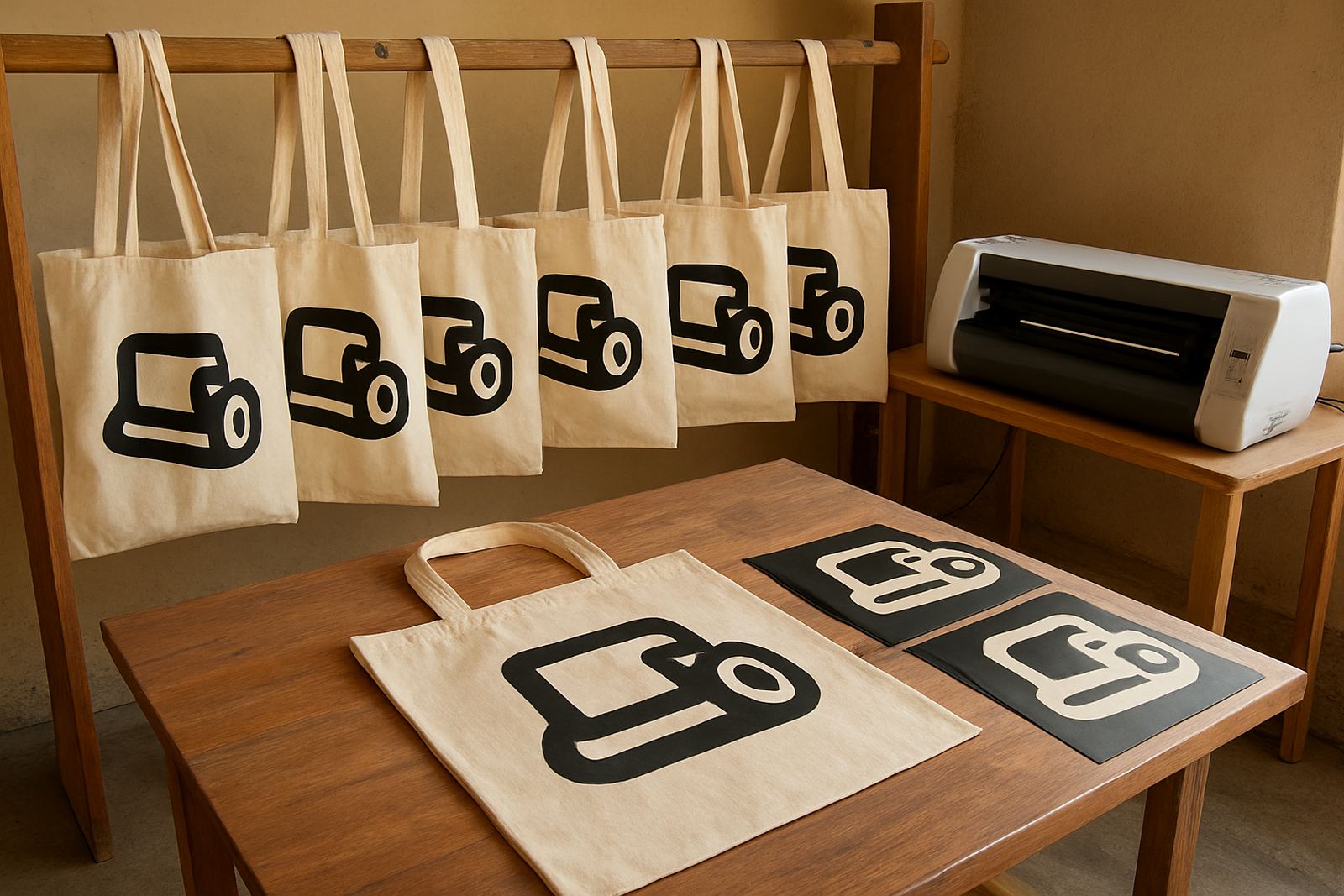
The client was a community fundraiser team in Roodepoort putting together tote bags for volunteers, ticket buyers and prize packs. They wanted a one-colour design that could be read quickly, sit neatly on the bag front and hold up after normal use. No special effects, no multiple layers, just clean lines and repeatable results.
The job needed to suit a short production window and a limited budget, which is common for charity work. The bags would be handed out at an outdoor event, so the print had to cope with dust, folding and a fair amount of handling during the day. We also had to keep the artwork simple enough for quick setup and easy reprints if the organiser needed extra stock later.
- Project type: tote bag branding for fundraiser use
- Location: Roodepoort, Gauteng
- Print style: one-colour heat transfer vinyl
- Use case: volunteer bags, donor packs and event giveaways
Constraints That Shaped The Setup
The biggest constraint was repeatability. The organiser needed the same mark on a batch of bags, and the bags themselves were not all from the same supplier. That meant we had to test the print area carefully and allow for small differences in fabric thickness and stitching. We also checked whether the cotton blend would take heat cleanly without marking or shrinking.
Load-shedding was part of the planning too, so the workflow had to allow for power interruptions. We prepped the design file, cut test pieces first and kept the press settings written down so the job could continue without guesswork. The event was in summer, so we also reminded the client to store completed bags in a dry room, not near a damp wall or open window.
- Bag type: mixed cotton blend tote bags
- Print area: front centre placement
- Artwork colour: single solid colour
- Planning note: account for stitching, seam lines and fabric stretch
What We Supplied And Set Up
We supplied the cutter setup support, blade calibration, material testing and workflow help needed to get the tote run moving without waste. The artwork was prepared for a single clean cut path, then we checked the weedability of the vinyl before running the full batch. After that, we confirmed the transfer temperature and dwell time on sample bags, because the same settings do not always suit every fabric.
The material choice was a standard heat transfer vinyl suited to cotton-rich tote bags, cut on a desktop craft cutter with a clean blade edge. Once the sample was approved, we ran the production pieces in small groups to keep consistency high. Ruan handled the machine side, Sipho checked the cut quality and Hlamalani helped the client understand how to position future reprints on the same bag style.
- Cut method: desktop craft cutter
- Application method: heat press
- Material: single-colour heat transfer vinyl
- Support included: machine setup, blade calibration, software connection help and cut quality troubleshooting
Timeline From Test Cut To Final Bags
The full project took two weeks from first sample to completed bags. Week one was for artwork prep, machine checks and sample testing. Week two was for final cutting, pressing and packing the finished totes for collection. That timing suited the fundraiser team because they needed enough space to distribute the bags before the event day, not after.
There was one small adjustment during the test stage when the first press sample showed slight edge lift on a heavier bag. We corrected the heat press contact and added a few seconds to the dwell time, then the second sample came out properly bonded. That saved the batch from inconsistency and gave the organiser a workable production note for future orders.
- Week 1: artwork prep, sample cut and press tests
- Week 2: production run, finishing and collection
- Test result: final settings confirmed after one adjustment
- Outcome: bags ready before the fundraising event
Results That Made The Bags Easy To Hand Out
The finished totes were clean, readable and consistent from bag to bag. The one-colour print suited the fundraiser well because it kept the message clear from a distance and stayed practical for repeated use after the event. The client could hand out the bags with confidence, and the branding looked tidy in photos too, which helped the campaign online and at the venue.
For a community project, those details matter. A bag that looks neat when flat must also look neat when carried, folded or stuffed with pamphlets and donation items. The final run held its shape well and the print remained smooth across the batch. The organiser later asked for notes on spacing and pressure so they could reorder more bags if needed.
- Branding result: neat, consistent one-colour finish
- Practical result: easy to pack, hand out and reuse
- Client benefit: low wastage and simple reordering notes
- Event benefit: clear visibility on the day
What We Would Repeat On The Next Tote Run
We would approach the next tote run the same way: sample first, check the fabric, confirm the press settings and keep the artwork uncomplicated. For this kind of work, the best outcome comes from steady setup rather than fancy extras. It also helps to plan around local delivery times, school traffic and site access in Roodepoort and surrounding areas, especially when a fundraiser is using a hall or community centre with limited parking.
If we did the same job again, we would still recommend a single strong colour, a clear front-centre position and a short production buffer before the event. That gives room for one more test if the fabric batch changes, and it keeps the organiser covered if they need extra bags at the last minute. It’s a practical route that works well for small teams and volunteers who need something dependable, not complicated.
- Best repeat approach: test first, then produce in batches
- Recommended print style: one colour, simple layout
- Best for: fundraisers, school groups, community drives and market stalls
- Aftercare: keep bags dry and flat until distribution
Key facts
| Project | Roodepoort Tote Run |
|---|---|
| Client type | Community fundraiser team |
| Town | Roodepoort |
| Print method | Heat transfer vinyl on tote bags |
| Timeline | 2 weeks |
| Key support | Setup, blade calibration, material testing, heat press checks and troubleshooting |