Materials, cutting specs and the practical limits
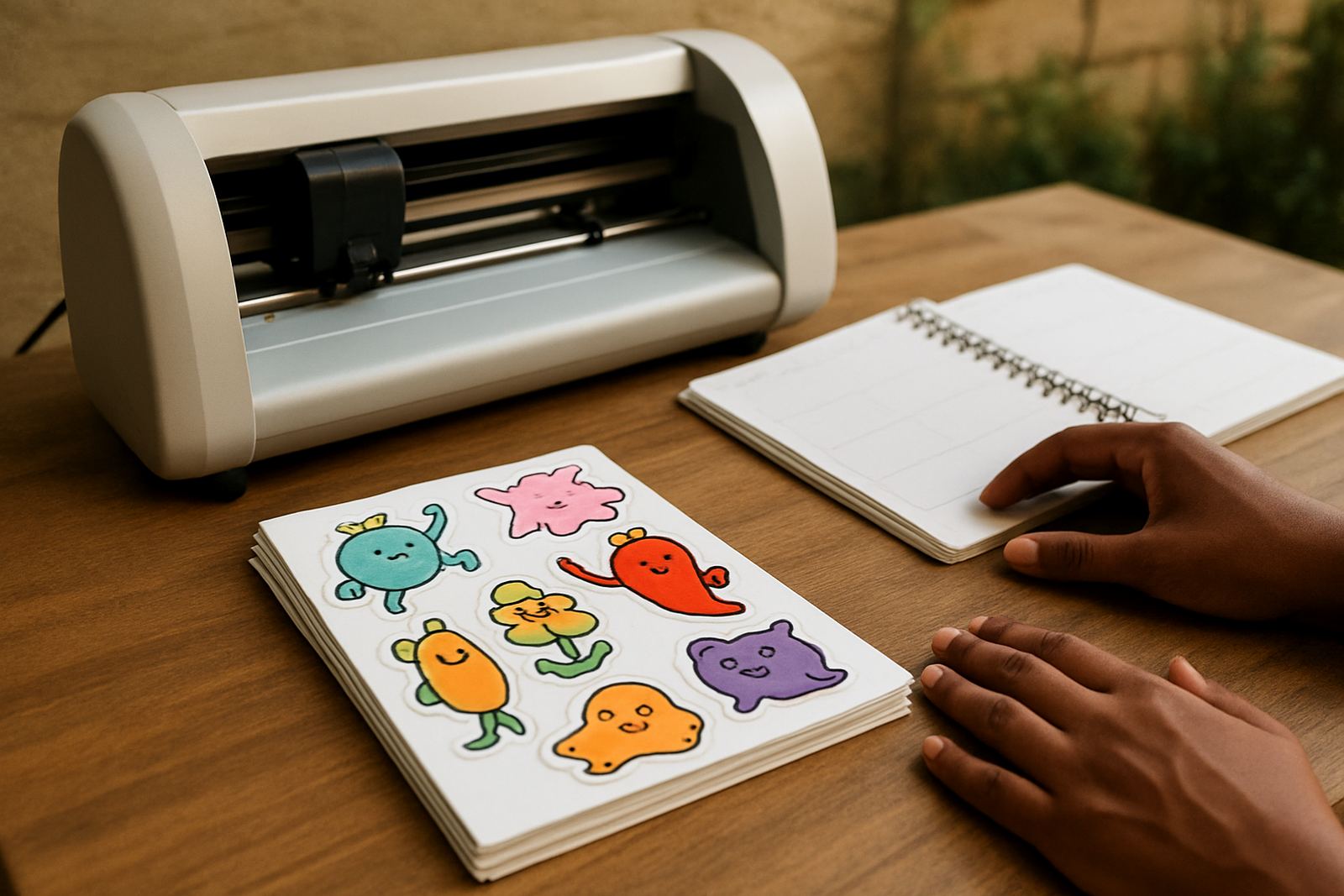
For this project we supplied a self-adhesive vinyl suitable for small-format sticker production, paired with a clean release liner so the pieces could be lifted without tearing. The sticker shapes were contour-cut around printed artwork, which meant the blade path had to stay accurate even on tighter corners and smaller internal curves. We tested the settings before the main run and adjusted blade depth and speed to suit the finish the client wanted.
We also checked how the material behaved under normal local conditions. Kempton Park can be dry and dusty, while parts of Gauteng get more humidity after rain, and either condition can affect the way smaller cut pieces release. The order was set up to keep waste low and to avoid minor lifting on narrow points. The client was especially concerned about clean edges for the smaller icons in the themed packs, so we kept the cut pressure consistent and avoided overcutting. That saved time at weeding stage and made packing easier.
- Finish: printed contour-cut stickers
- Format: small retail pack sizes for themed stationery sets
- Cut method: precision contour cutting
- Checks done: blade calibration, material testing and cut quality review
How we handled the setup and support
Before the final run, we helped the client check the artwork file layout, sizing and registration marks so the cut path matched the printed design. We also gave practical guidance on feeding the sheet straight, keeping the backing flat and storing unused sheets away from dust. For a home-based seller working from a spare room, those small details matter because even a slight feed issue can waste a full sheet.
The support side covered the usual hurdles that come up with desktop craft cutters. We talked through software connection help, blade calibration and cut quality troubleshooting so the client could repeat the same results later without guessing. The client also wanted to know how often to clean the machine and what to check after a power interruption, since load-shedding can interrupt a cutting session at the worst time. We kept the advice simple and practical, with steps that could be followed again when the next batch was due.
- Artwork and layout check
- Software connection help
- Blade calibration and test cuts
- Routine machine cleaning advice
- Workflow help for repeat batches
Timeline from test cut to packed stock
The project moved from first test cut to completed order over two weeks. Week one was used for sample testing, setting blade pressure and checking how the shapes released from the backing. Week two covered the production run, final inspection and packing. That pace suited the client because the launch date was fixed and the packs needed to be ready before the first weekend market run.
Nothing was rushed, but the timeline was tight enough to keep the order focused. We kept the communication direct, with one round of adjustments after the first sample sheets. The small change was enough to improve the release on the finer corners, and after that the cutting stayed consistent for the balance of the run. The result was a cleaner finish and less time spent hand-trimming, which helped the seller keep costs under control.
What the seller gained from the order
The immediate result was a neat set of contour-cut stickers that matched the themed packs and looked ready for retail. The seller could pack faster because the stickers separated cleanly and did not need extra tidying before bagging. That mattered for a home business where every minute counts, especially when orders come in after hours and need to go out the next morning.
There was also a practical gain beyond the sticker sheets themselves. The client now had a repeatable process for future print runs, including a better understanding of blade settings, sheet feeding and storage. That makes a real difference for small businesses selling from Johannesburg, Kempton Park and surrounding areas where people expect quick turnaround and neat presentation. It also means less material waste, fewer rejected sheets and a cleaner look on the shelf.
- Cleaner peels and sharper edges
- Faster packing for themed sets
- Less waste from failed cuts
- Settings saved for future reorders
What we would keep the same on the next sticker batch
For the next batch, we would follow the same approach: test first, then cut the full run once the settings are proven. That is the safest way to handle smaller sticker shapes, especially when the client wants consistency across multiple themed designs. We would also keep the same attention on backing material and release behaviour, because once a seller starts shipping regularly, a reliable cut matters more than anything else.
We would keep support close to the job as well, with checks on blade condition, software setup and pack counts before dispatch. If the client expands into larger seasonal runs, we would suggest a fresh test whenever the artwork size changes or when a different adhesive stock is used. That avoids surprises and keeps the output neat from the first sheet to the last. In a city like Kempton Park, where many small sellers run tight schedules, that kind of consistency saves real time and money.
Key facts
| Project | Kempton Park contour-cut stickers |
|---|---|
| Client type | Home-based stationery seller |
| Town | Kempton Park |
| Timeline | 2 weeks |
| Process | Artwork check, test cuts, production run and packing |
| Support used | Blade calibration, material testing, cut quality troubleshooting |