
A tidy pantry for a busy Alberton home
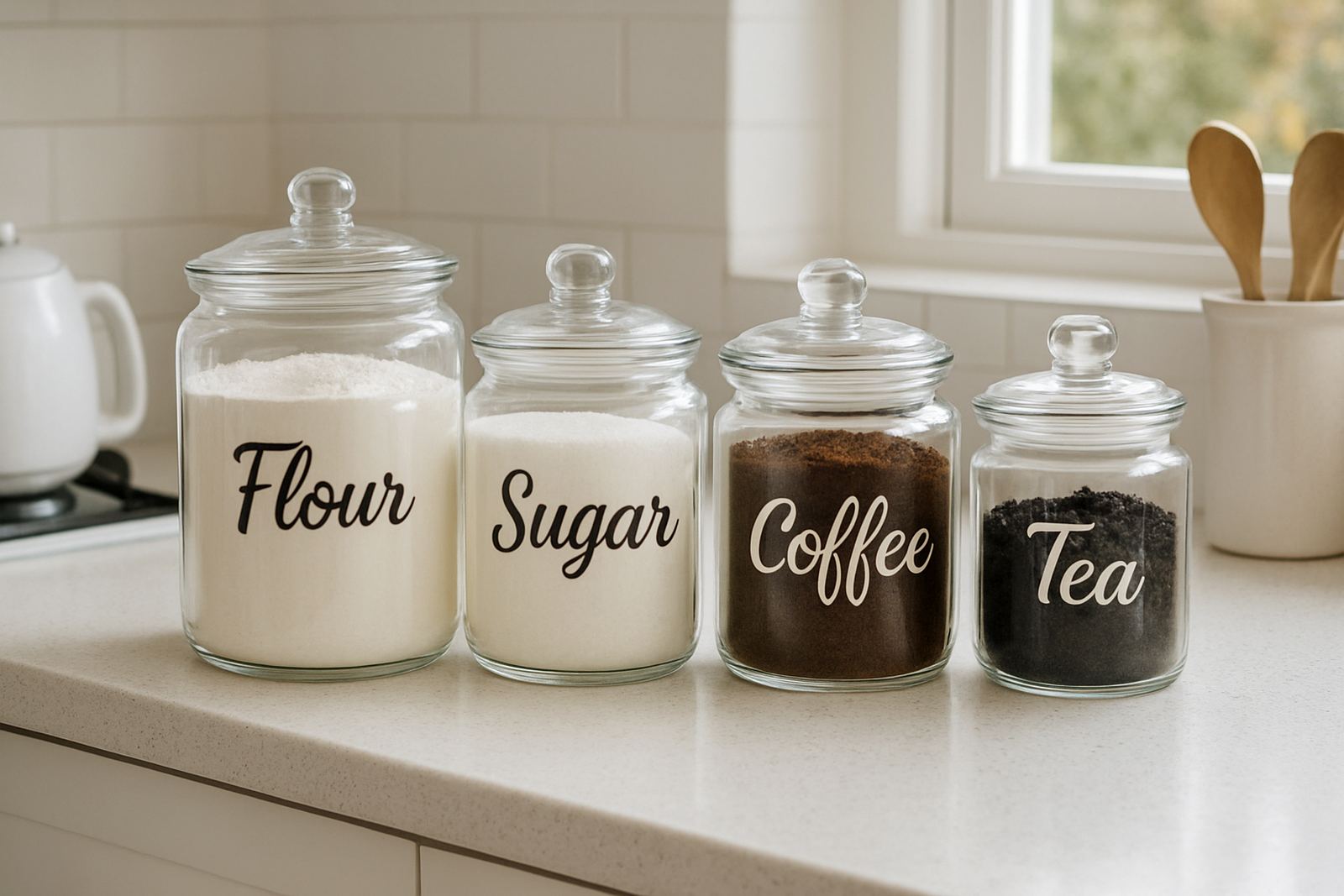
The client was a homeowner in Alberton, working through a kitchen refresh and wanting the pantry to feel calmer and easier to use. The brief was simple on paper: label jars, canisters, dry goods tubs and a few shelf zones so every item had a clear place and the family could find things quickly.
They did not want anything fussy. The labels had to look neat, suit a light coloured kitchen, and hold up to daily use near steam, biscuit crumbs and the odd sticky fingerprint. Because the pantry sat close to the scullery, we also allowed for a bit of extra resistance to moisture and cleaning. A small job, yes, but the kind that makes a kitchen work properly.
- Client type: private home in Alberton
- Project goal: pantry and kitchen storage labels
- Look: clean, simple and readable
- Use case: everyday family storage
What the brief needed from the labels
The main requirement was legibility from a standing height, with enough contrast to read quickly while cooking. The client wanted consistent sizing across different containers, from narrow spice jars to larger flour and rice canisters. We also had to work around the fact that the storage containers were not all the same shape, so each label needed to be measured to suit the actual surfaces.
We recommended a practical approach rather than a decorative one. That meant using a single font style, keeping wording short, and allowing enough margin so the labels would not curl at the edges. For items that may be re-filled often, like sugar and maize meal, we made sure the label placement would not interfere with lids or pouring spouts.
- Readable at arm’s length
- Matched mixed container sizes
- Short, plain wording for quick sorting
- Label edges kept clear of handles and lids
Materials and cut specs we supplied
For this job we supplied cut vinyl labels suited to indoor kitchen use, made in a finish that wipes clean easily. The set included pantry words, container labels and a few category labels for grouped shelves. Sizes were kept practical, mostly between 25 mm and 90 mm high depending on the container face, with longer words scaled to fit without crowding.
The client wanted a simple, understated look, so we kept the colours neutral and the lettering crisp. On a pantry shelf, that matters more than many people expect. If the label is too shiny or too thin, it can become difficult to read under cabinet lighting. We also checked that each cut was clean enough for small words like “rice”, “tea” and “syrup”, which can be tricky if a blade is not set correctly.
- Indoor vinyl suitable for kitchen storage
- Label height range: 25 mm to 90 mm
- Clean-cut text for small container names
- Wipeable surface for daily kitchen cleaning
Setup, calibration and cut quality checks
Before cutting the final set, we checked the machine setup, blade calibration and software connection so the sizing stayed accurate across the job. Pantry labels may be small, but they show up every fault in a cutter. If the blade is even slightly off, small letters can lift or leave rough corners. That is not something you want on a kitchen shelf.
We ran material testing on a few sample cuts first, then adjusted pressure and cutting speed to suit the label material. After that, we checked a test strip against the container curves and lid clearances. One of the nice parts of this project was that the client had already done a fair bit of sorting, so the labels could be matched to a proper storage system rather than being added later as an afterthought.
- Blade calibration checked before production
- Sample cuts tested on spare material
- Software connection confirmed for accurate sizing
- Cut quality checked on small text and longer words
Turnaround in one week and fitting support
The full job was completed over one week. Day one was brief confirmation and measurement. Midweek we cut and checked the labels, then prepared the set for application. By the end of the week the client had the finished pantry labels ready to apply, with a simple layout plan for where each item should go. That kept the installation quick and avoided redoing any shelves later.
We also gave practical advice for applying the labels neatly on smooth canisters and slightly curved jars. In hot weather or during load-shedding when the kitchen gets warmer than usual, adhesive work needs a bit of care, so we suggested a clean, dry surface and steady pressure rather than rushing the process. It sounds obvious, but it makes a real difference. A calm application saves a lot of fiddling later.
- Timeline: 1 week total
- Measurement and planning first
- Cutting and quality checks midweek
- Final application guidance included
The result in the pantry
The finished pantry looked cleaner straight away. More importantly, it became easier to use. The client could see what was in each container without lifting lids, and the shelf groupings made refilling simpler. For a family kitchen, that means fewer mixed-up containers, less waste, and less time standing there trying to find the cornflour while supper is on the stove.
Because the labels were kept consistent, the pantry now has a joined-up look instead of a patchwork of handwritten tags and mismatched stickers. The client told us the whole shelf feels more organised now, and the little things matter most there. It is the sort of change that does not shout, but it makes everyday life smoother. That is usually what a good home label job should do.
- Clearer storage categories
- Faster item recognition
- More consistent pantry appearance
- Better day-to-day use for the household
What we would repeat on the next kitchen job
If we did a similar pantry label project again in Alberton or anywhere else in Gauteng, we would take the same approach: measure the actual containers, confirm the wording early, and test a small sample before cutting the full set. That keeps the result practical and avoids waste.
For kitchen work, we also like to check cleaning habits and shelf exposure before choosing the final finish. A pantry near a kettle, sink or sunny window may need a little extra thought. The best results come from simple choices made carefully, not from overcomplicating the job. In this case the plan was straightforward, and it worked well.
- Measure containers before cutting
- Confirm wording early
- Test a sample on the real surface
- Match the finish to heat, moisture and cleaning needs
Key facts
| Project type | Home pantry and kitchen storage labels |
|---|---|
| Client area | Alberton |
| Turnaround | 1 week |
| Label material | Indoor wipeable vinyl |
| Label size range | 25 mm to 90 mm high |
| Service support | Setup, calibration, testing and application guidance |